INDIVIDUAL FAMILY SUPPORT & COACHING

Practical Support Built Around Your Family

Every family is different, and sometimes parents and carers need more individual guidance than a group setting can provide.
Our Individual Family Support & Coaching service provides short-term, practical support for families who would benefit from one-to-one guidance around their child’s development, participation and everyday routines.
The focus is on helping families identify meaningful goals, build confidence and develop strategies they can continue using independently.

A parent practising a shared snack-time routine with a child and practitioner.

Who Is Individual Family Support For?

Individual support may be helpful for parents, carers and kin who would like more personalised guidance around areas such as:
  • Communication
  • Play and interaction
  • Emotional regulation
  • Everyday routines
  • Positive behaviour support
  • Sensory preferences
  • Independence
  • Participation
  • School readiness
  • Service navigation
  • Family goals
  • Accessing other supports
It may also be useful when a family has specific concerns that would be easier to discuss privately.
A mother explaining her priorities to a practitioner.

What Happens During Individual Support?

Support begins with listening.
Our practitioners take time to understand:
  • Your child’s strengths
  • Your concerns
  • Your family’s priorities
  • Your everyday routines
  • What is already working well
  • What feels difficult
  • What you would like to change or improve
Together, we can identify practical goals that are meaningful to your family.
A parent practising a playful interaction with their child.

Setting Meaningful Family Goals

Every family has different priorities.
Rather than setting goals for families, we work with parents and carers to identify what matters most to them.
Goals may relate to areas such as:
  • Helping a child communicate their needs
  • Supporting smoother everyday routines
  • Building confidence during community activities
  • Supporting emotional regulation
  • Encouraging greater independence
  • Improving participation in play
  • Preparing for school
  • Supporting transitions
  • Finding appropriate services
Practitioners can help break larger goals into smaller, achievable steps.
A parent discussing support options with a coordinator.

Practical Coaching for Everyday Life

Individual coaching is designed to be practical.
Rather than focusing only on information, practitioners can demonstrate strategies, discuss real-life situations and support parents and carers as they practise new approaches.
This may include strategies for:
  • Playing
  • Reading
  • Mealtimes
  • Getting dressed
  • Bedtime routines
  • Shopping
  • Community activities
  • Interactions with siblings
  • Preparing for early learning or school
The aim is to make strategies realistic and easy to incorporate into everyday family life.
A child practising an everyday task with a parent nearby.

Building Parent and Carer Confidence

Parents and carers know their child best.
Our role is to provide guidance that strengthens the family’s existing knowledge and confidence.
Coaching may help parents and carers:
  • Understand their child’s strengths
  • Identify what may be affecting participation
  • Try new strategies
  • Recognise what is already working
  • Respond more confidently to challenges
  • Set realistic goals
  • Review progress
  • Make informed decisions about additional support
The goal is not to create dependence on services.
We want families to feel increasingly confident using practical strategies independently.
A parent and child sharing a picture book.

Individual Parent Consultations

Families may also access private consultations with a practitioner to discuss concerns in more detail.
Consultations may include:
  • Discussing the child’s participation
  • Listening to parent or carer concerns
  • Reviewing family goals
  • Providing individual guidance
  • Discussing progress
  • Identifying possible next steps
Private consultations are generally designed as 30–45-minute appointments, with additional appointments arranged when more time or a different setting is required.
A parent considering support options during a relaxed first conversation.

Support That Responds to Your Family

Families do not all need the same level or type of support.
Some families may need only one or two conversations.
Others may benefit from short-term follow-up while they practise strategies and work towards specific goals.
Support can be reviewed regularly and adjusted according to:
  • Your family’s priorities
  • Your child’s progress
  • What strategies are working
  • New concerns
  • Changes in routines
  • Additional support needs
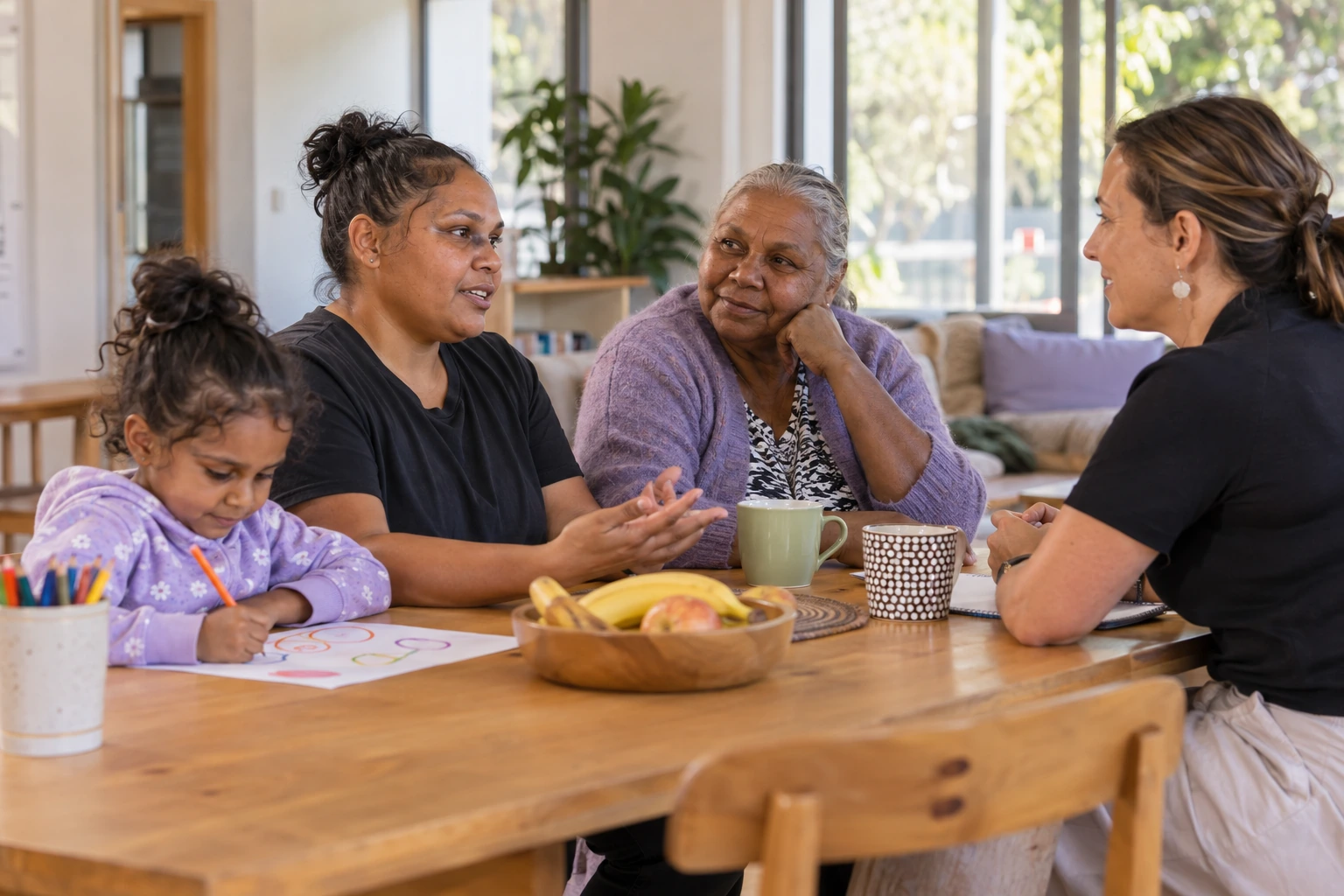
Family members speaking with a practitioner while their child draws.

Working on Everyday Development

Communication

Helping families support their child to express needs, make choices and participate in interaction.

Play and Social Interaction

Building opportunities for shared play, connection and positive interaction.

Emotional Regulation

Supporting families to respond to emotions and help children participate more comfortably in everyday situations.

Positive Behaviour Support

Helping families consider what may be influencing behaviour and identify practical, developmentally appropriate strategies.

Independence

Supporting children to build skills and confidence in everyday activities.

Routines and Transitions

Helping families develop strategies around mealtimes, dressing, bedtime, leaving the house, changing activities and other daily routines.

Participation

Supporting children to participate more meaningfully at home, in early learning, at school and in the community.
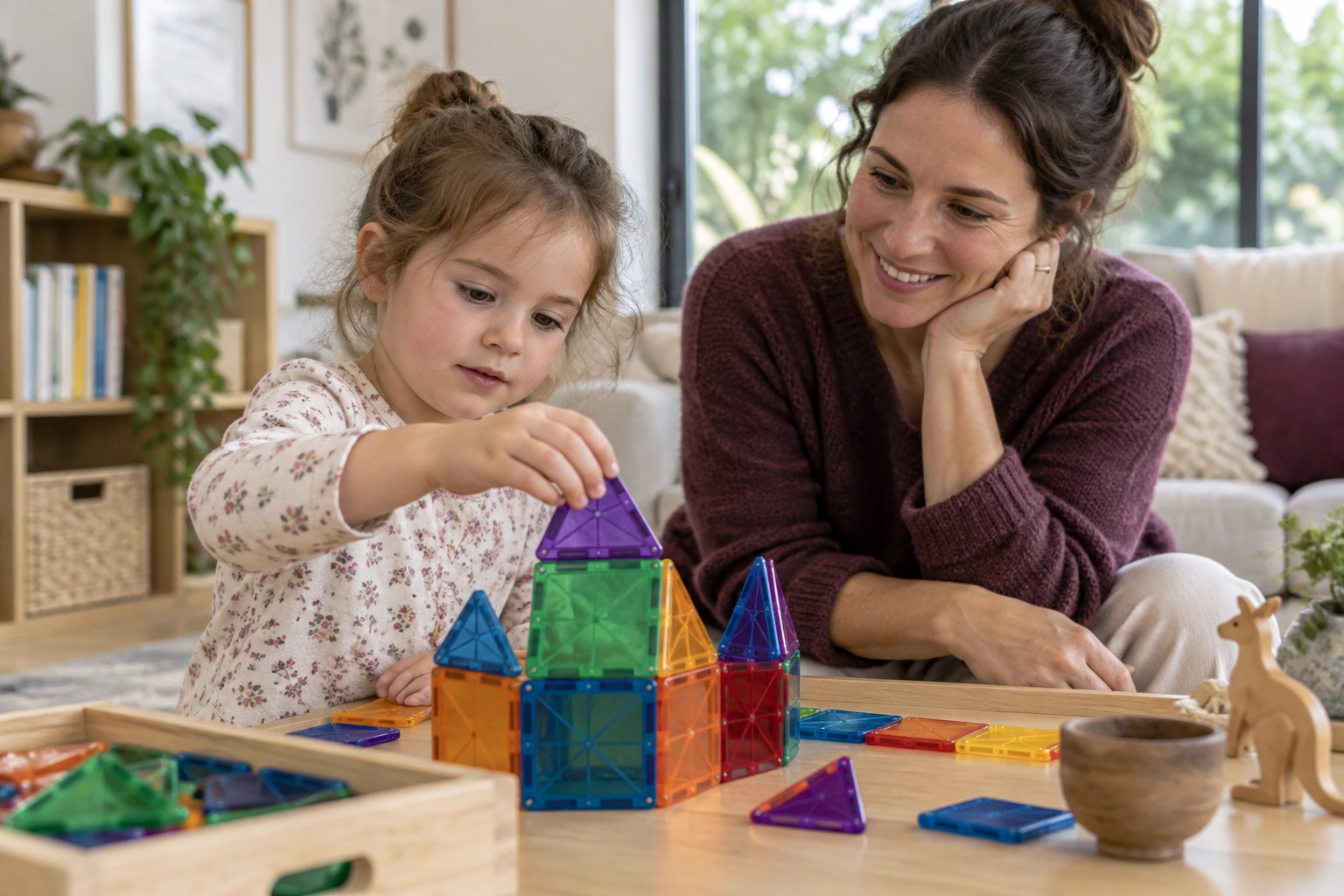
A child building with colourful tiles while a parent follows their lead.

Reviewing Progress Together

Family goals and strategies should not remain fixed if they are not working.
Our practitioners can review progress with parents and carers and discuss:
  • What has improved
  • What remains challenging
  • Which strategies have been helpful
  • What may need to change
  • Whether goals should be adjusted
  • Whether additional support is needed
Parents practising everyday strategies in a small workshop.

Connecting With Other Services

Sometimes a family may need support beyond the scope of individual coaching.
Our team can help families understand available services and identify appropriate referral pathways.
This may include helping families connect with:
  • Allied health services
  • Health professionals
  • Early childhood services
  • Schools
  • Disability services
  • Community organisations
  • Other relevant supports
Families can also receive guidance about preparing for appointments, understanding referral pathways and asking informed questions.
A coordinator listening during a service-navigation phone call.

Support From Experienced Practitioners

Individual family support may involve professionals such as:
  • Social Workers
  • Family Support Practitioners
  • Early Childhood Practitioners
  • Behaviour Support Practitioners
  • Allied Health Professionals
  • Community Support Workers
The practitioner involved will depend on the family’s goals and the type of support required.
Practitioners sharing ideas at a community workspace.

Culturally Responsive Support

We recognise that culture, language and family circumstances can shape how support should be provided.
Where appropriate and available, families may be supported by:
  • Multilingual practitioners
  • Bicultural workers
  • Qualified interpreters
  • Practitioners with understanding of culturally diverse communities
Our aim is to ensure families can communicate comfortably and understand the support available to them.
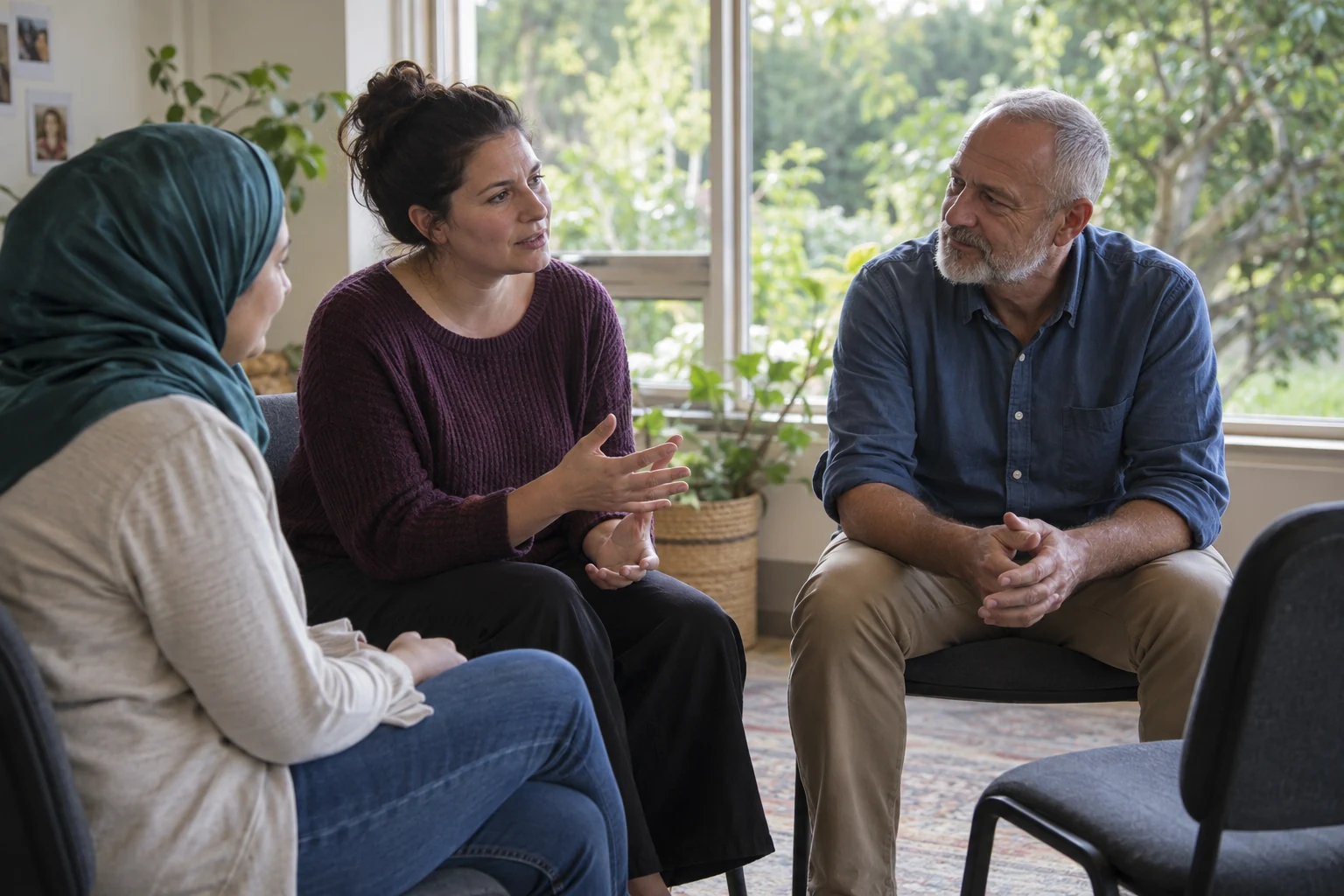
Parents sharing a relaxed conversation in a supportive group.

Flexible Ways to Access Support

Individual family support may be provided through:
  • Private face-to-face appointments
  • Appointments following group sessions
  • Home-based support
  • Community locations
  • Telephone consultations
  • Video consultations
The most appropriate option will depend on the family’s needs, location and circumstances.
Families taking part in a community garden activity.

What Families Can Expect

Families can expect:
  • Individual attention
  • A respectful and non-judgemental approach
  • Practical guidance
  • Clear family goals
  • Strategies for everyday life
  • Regular review of progress
  • Support to build confidence
  • Referral guidance where required
  • Respect for family culture and preferences
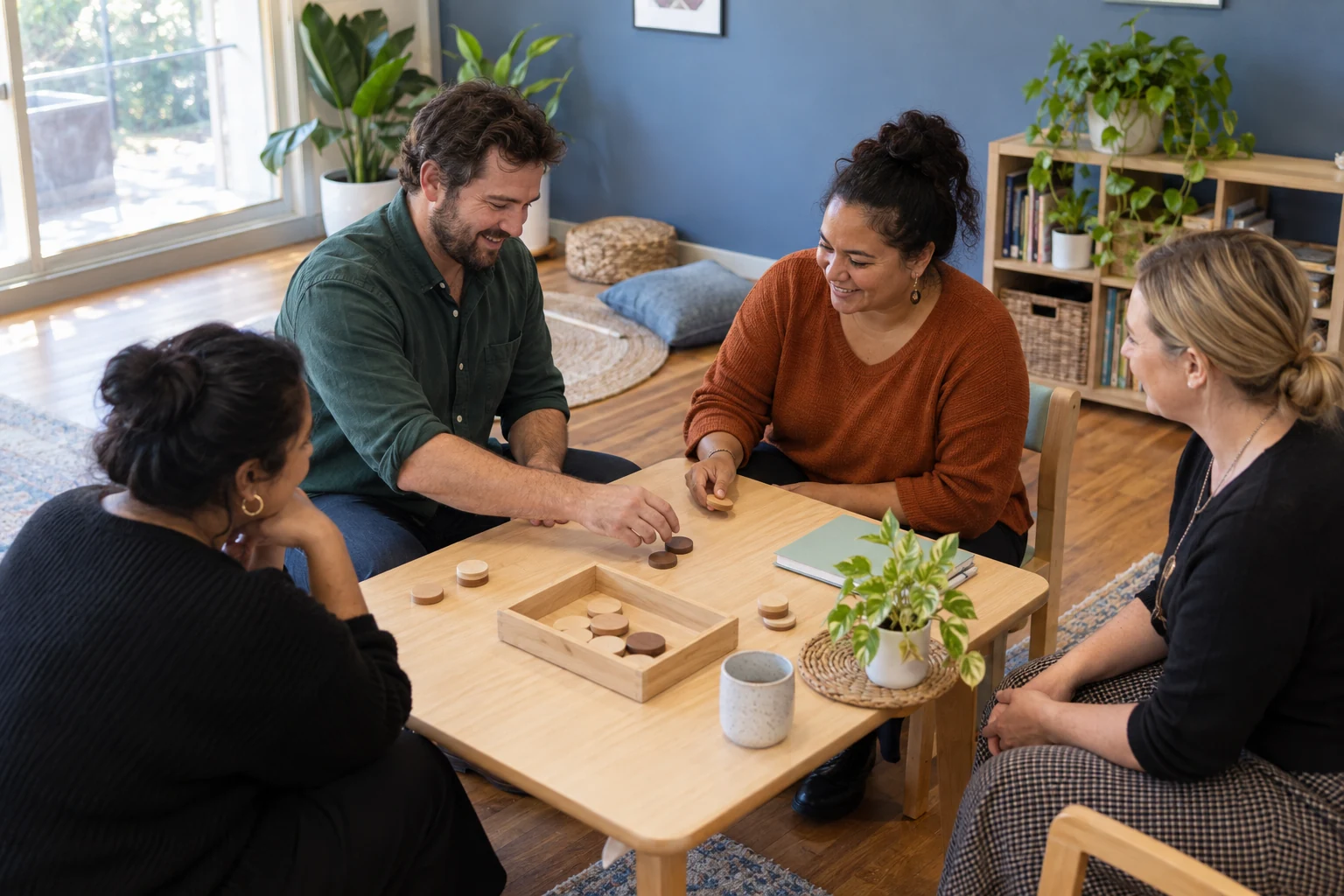
Practitioners exchanging ideas during a collaborative learning session.

What Individual Family Support Is Not

Individual Family Support & Coaching is focused on short-term family capacity building.
It is not intended to replace:
  • Diagnostic assessment
  • Long-term clinical therapy
  • Emergency services
  • Crisis support
  • Ongoing specialist case management
Where more specialised support is required, our team can help families identify appropriate services.

Not Sure Whether You Need Individual Support?

You do not need to know exactly what service you need before contacting us.
Our team can talk with you about:
  • Your child’s strengths
  • Your concerns
  • Your family’s priorities
  • Everyday challenges
  • The support you have already tried
Together, we can discuss whether individual family support may be appropriate and identify practical next steps.
A team member listening attentively during a phone conversation.
Final Call to Action

Support That Starts With Your Family

Individual Family Support & Coaching gives parents and carers an opportunity to receive practical, personalised guidance based on the needs and priorities of their family.
If you would like to speak with our team about individual support, we are here to listen.
Buttons